from the archives of Essex Terror: A Minute At A Time

Notes: This was published on the Essex Terror website on October 16th, 2014. It was itself a reprint of a short lived wikipedia article, which was deleted due to it’s failure to be in the public interest. Any similarities to this are purely coincidental.]

__________

A Minute At A Time (1978-1979) was a British Television arts programme that was broadcast on the Anglia Television region of ITV. Each episode was exactly one minute long and consisted of a fixed-camera shot of an object or location, usually (although not always) devoid of humans. The programme is unique [citation needed] for being broadcast soundlessly.

1. History
2. List of episodes
3. Controversies
4. International versions
5. Theories of meaning
6. References

History

A Minute At A Time first appeared on Anglia Television at 00:00:01 GMT, 1 second after the scheduled programme time, on Friday, 16th June 1978 [1][2]. It was to be a weekly programme, running indefinitely, although in the end it lasted just 43 weeks. Although commissioned to fill the difficult “Midnight Minute”[3], the programme was intended for a family audience and to help fulfil the ITV franchise’s educational programming commitments[4]. However, the programme was not to prove a success, and was discontinued within a year[5]. Although little seen at the time[6], it has since gained a cult following among advocates of the New Boringness movement[citation needed].

List of episodes

The episodes were presented with a superimposed title at the lower edge of the screen, showing the name of that particular episode and, beneath it, the date and time at which it was filmed[7]. It is unknown if the shown dates are factually correct[8] (and some are clearly fabricated, as they would have occurred after the original broadcast date). The title disappeared from screen at the end of the fourth second of each episode.

Each broadcast ended abruptly, with no end credits or titles, instead leading directly into the next scheduled programme.

Original broadcast date – Title – Episode description

1. June 16th, 1978 – The wind in the trees, June 11th, 1978, 7:23am-7:24am – The upper reaches of several horse chestnut trees, shot from below.

2. June 23rd, 1978 – A bridge, June 12th, 1978, 12:34pm-12:35pm – A wooden bridge across a woodland stream, shot at an oblique angle so that the far end of the bridge cannot quite be seen.

3. June 30th, 1978 – WindmillJune 13th, 1978, 5:01pm-5:02pm – A child’s windmill on the top of a sandcastle, rotating in the breeze.

4. July 7th, 1978 – Tap, June 14th, 1978, 6:29am-6:30am – A close-up on a water droplet welling at a tapmouth.

5. July 14th, 1978 – Milk, June 15th, 1978, 8:24am-8:25am – A pint bottle of milk is picked from a table, taken out of view, and then placed back down on the table having been completely drunk.

6. July 21st, 1978 – Cat, June 10th, 1978, 9:59pm-10:00pm – A cat eating some processed cat food.

7. July 28th, 1978 – A summer drink, June 30th, 1978, 1:08pm-1:09pm – Ice cubes melting in a tall glass of red liquid.

8. August 4th, 1978 – Automation, July 12th, 1978, 6:45am-6:46am – A washing machine during a spincycle, filmed from outside.

9. August 11th, 1978 – Toad, June 30th, 1978, 12:58pm-12:59pm – A frog sat in the summer sun.

10. August 18th, 1978 – Swimming pool, July 29th, 1978, 12:03am-12:04am – Ripples on a pond.

11. August 25th, 1978 – Cow, August 12th, 1978, 11:02am-11:03am – A close up of a fly on a white furred surface.

12. September 1st, 1978 – Pollen, June 28th, 1978, 5:48pm-5:49pm – A meadow in summer, the air thick with floating pollen.

13. September 8th, 1978 – Children, September 5th, 1978, 3:25pm-3:26pm – This episode has been lost.

14. September 15th, 1978 – After the harvest, September 12th, 1978, 6:21pm-6:22pm – Wheat fields burning.

15. September 22nd, 1978 – Bicycle, September 13th, 1978, 11:46am-11:47am – An upturned bicycle, its rear wheel spinning slowly to a stop.

16. September 29th, 1978 – Robeson, September 14th, 1978, 9:11pm-9:12pm – An unusually sized vinyl record (identified by the use of freeze frame as 16 Spirituals by Paul Robeson) playing on a record player.

17. October 6th, 1978 – Out of season Essex seaside resort, September 30th, 1978, 12:22pm-12:23pm – An exterior shot of an amusements arcade on Southend seafront.

18. October 13th, 1978 – Out of season Essex seaside resort in the rain, September 30th, 1978, 12:23pm-12:24pm – An exterior shot of an amusements arcade on Southend seafront during a sudden downpour.

19. October 20th, 1978 – Fish (no date given) – Dead fish on crushed ice, presumably in a fishmongers.

20. October 27th, 1978 – Violin, October 1st, 6:32pm-6:33pm – A woman playing a violin in a living room.

21. November 3rd, 1978 – Tea, October 18th, 8:30am-8:31am – Water coming to the boil in an open pan.

22. November 10th, 1978 – Crow, October 22nd, 12:59pm-1:00pm – A crow pecking at the camera lens.

23. November 17th, 1978 – The aftermath of a one-sided war, October 23rd, 7:34am – A spider rebuilding a shattered web.

24. November 24th, 1978 – Bonfire, November 5th, 7:56pm-7:57pm – A ragdoll with a crow’s head burning on a twig bonfire.

25. December 1st, 1978 – The aftermath of a one-sided war, November 30th, 4:59pm-5:00pm – Blood being swept into a runlet in an abattoir’s floor.

26. December 8th, 1978 – Happy Birthday, June 16th 1979, 4:32pm-4:33pm – A solitary candle burning on a mis-shapen cake.

27. December 15th, 1978 – A sink full of filth, December 12th, 1978, 6:54am-6:55am – Clumps of hair drop into an unfilled sink.

28. December 22nd, 1978 – Fish, October 19th, 1978, 3:12am-3:13am – Unremarkable fish in a fish tank.

29. December 29th, 1978 – Presents, December 25th, 1978, 9:00am-9:01am – Scraps of wrapping paper blowing down a dead grey street.

30. January 5th, 1979 – Television, December 26th, 1978, 7:41pm-7:42pm – A television shows an image of a television that shows an image of a television that shows an image of a television that shows an image of a television that shows an image of a television that has not been turned on.

31. January 12th, 1979 – A winter drink, June 30th, 1978, 1:06pm-1:07pm – A tall glass being slowly filled with a red liquid.

32. January 19th, 1979 – The sun at midnight, January 1st, 1979, 12:00am-12:01am – An entirely black screen, possibly the result of underexposure of the film.

33. January 26th, 1979 – Crab, June 16th, 1978, 12:00pm-12:01pm – A crab dangling from a piece of meat dangling from a fishing line.

34. February 2nd, 1979 – Washing, January 17th, 1979, 2:32pm-2:33pm – Clothes frozen stiff on a rotary washing line.

35. February 9th, 1979 – The Moon (no date given) – The moon, half full (nighttime).

36. February 16th, 1979 – The Moon (no date given) – The moon, half full (daytime).

37. February 23rd, 1979 – The average lifetime of a cumulus cloud is sixty three minutes, July 17th, 1978, 11:56am-11:57am – A cumulus cloud that looks slightly reminiscent of a hag.

38. March 2nd, 1979 – Melt, February 27th, 1979, 11:55am-11:56am – Close-up of a snow covered holly leaf.

39. March 9th, 1979 – The film was not an enjoyable experience at all, March 6th, 1979, 9:47pm-9:48pm – A crowd of people leaving a cinema.

40. March 16th, 1979 – A photograph of my mother, March 15th, 1979, 10:39:am-10:40am – A shot of a photograph of an unidentified woman.

41. March 23rd, 1979 – Waiting in line, March 6th, 1979, 7:36pm-7:37pm – A close up of the feet of people in a queue.

42. March 30th, 1979 – Southend United versus Liverpool, January 10th, 1979, 7:44pm-7:45pm – An orange ball on a snow covered field.

43. April 6th, 1979 – Crow, April 5th, 1979, 7:58am-7:59pm – A crow eating a chip.

44. April 13th, 1979 – The Sun at midday, April 13th, 1979, 12:00pm-12:01pm – An entirely white screen, possibly the result of overexposure of the film.

Controversies

Several complaints were directed towards Anglia Television over episode 9, which was claimed to have almost certainly involved a chance of severe harm to the animal involved. Anglia Television claimed that all necessary procedures were overseen[citation needed], and no further investigation occurred.

International versions

The series was broadcast on PBS in America, shown consecutively in a single hour slot on the 16th June 1979, although episode 13 was omitted. The reason for its omission is unknown.

Due to running time discrepancies introduced by the format conversion process[9], each minute ran to 62.5 seconds, giving the series a total running time of 44 minutes 48 seconds.

Due to archiving mistakes at Anglia Television, several of the original broadcasts have been lost (episodes 6, 7, 13, 14, 18, 19, 23, 24, 25, 26, 27, 28, 30, 31, 34, 36, 37, 40 and 42), meaning the only surviving versions of these episodes are from the American broadcast. Because of this, episode 13 is currently considered lost, and, owing to the low viewing figures of the original broadcasts, its contents are unknown[10].

Theories of meaning

Several theories of meaning have been proposed over the years[citation needed], most of which centre around the final episode’s broadcast date coinciding with Good Friday. However, it is more likely that the over-reaching theme is one of artistic redundancy on the part of the director [original research?].

References

1. Radio Times, June 16th, 1978 – www.everyradiotimes.com/19780616.com
2. The Anglia Television Synchronisation Project – www.anglialive.co.uk/synchronisedlivefeed.html?date=19780616&clock=bigben
3. The Most Troublesome Time – Lord Reith And The Midnight Minute, by Greg Dyke (BBC Press, 2011)
4. The Government Report On Television Standards And Requirement, 1977 (Her Majesty’s Stationery Office)
5. Anglia Television – A History Of Abject Failure, by Trisha Goddard (Norfolklore Books, 1999)
6. Anglia Television Viewing Records, 1979 – www.televisionviewingfiguresonline.gov.uk/angliaregion.html
7. Reference irretrievable
8. An analysis of sunlight patterns in A Minute At A Time – www.davidicke.com.co/research/aminuteatatime_analysis_and_discrepancies.html
9. NTSC vs PAL – www.diffen.com/difference/NTSC_vs_PAL
10. A Minute At A Time – The Truth of The Missing Minute – www.davidicke.co.com/articles/aminuteatatime_international_conspiracy_british_monarchy.html


from the archives of Essex Terror: The Essex Terror Exhibition And Guidebook

Notes: In the spring months of 2012, a unique exhibition was held in Chelmsford, the historic county town of Essex, detailing the history of the beloved Essex institution that was Essex Terror. This is a recollection of that remembrance, originally published on July 2nd, 2012.

__________

For reasons not yet explained to the public, Essex Terror was recently, and some would say misguidedly, the subject of a fairly well researched historical exhibition, containing, as far as my extensively trained eye could see, only two factual inaccuracies and no libellous assertions. Taking place in the Essex city of Chelmsford, a town so haunted no one there even dares talk of ghosts for fear of being overheard by a nearby ghoul of some kind and possibly causing offence.

An exciting exhibition brochure, containing many of Essex Terror’s finest articles from the years, as well as the brand-new and exclusive HOME OF HELL adventure game book, can be purchased for 10 pounds from here. [please not this book is no longer available for purchase]

Below we have reproduced the restrospective as perfectly as this format allows. All that is missing is the complete version of the Moon Issue, due to the last surviving copy of it being too fragile to be photographed.

***

25 Years Of Horror And Fear Across The County

Essex Terror, possibly the most celebrated Horror (also Science Fiction, Fantasy and Local Interest) magazine this county produced during the 1990s, has had an influence far exceeding anything its short original run or meagre sales ever would have suggested possible. Cited by people as diverse as Neil Gaiman (“[L]argely forgotten…”) and James Herbert (“Their interview with me was the most unsettling experience of my career”), Essex Terror has proven to be as enduring as it was groundbreaking.

This exhibition looks back at its past, the events which lead up to its past, its present day incarnation as essexterror.com and finally its hoped-for futures.

This exhibition would not have been possible without the kind help, assistance, permission and existence of The Ted Vaaak Foundation, Ted Vaak, David N. Guy, Ross Field, Thomas Morton, David N. Guy, David N. Guy, Raz Webster, Albin Stanescu, Jeff Randall, Peter Bradshaw, Jack Chick and, of course, the people of Essex.

***

The Many Faces Of Essex Terror

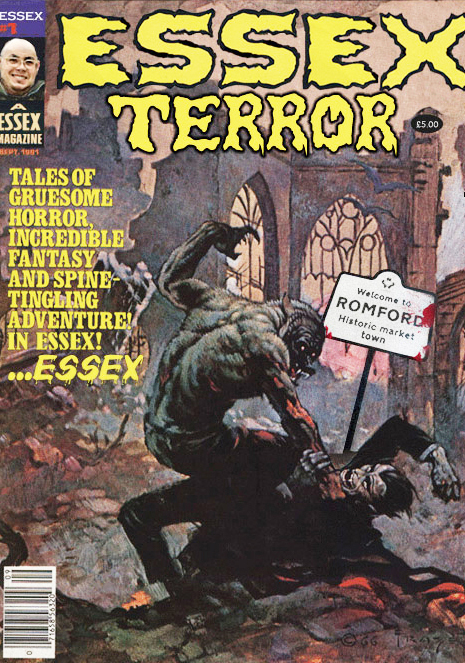
Over the years, Essex Terror Magazine has gone through three major incarnations, at least in print. The original run of the magazine, and the one most closely associated with editor, proprietor and major storywriter Ted Vaak, lasted for a mere 12 issues over the course of a single year (starting in July 1989 and ending in June 1990). For Ted, this was to be the beginning of the end of his involvement with the traditional print industry, turning his attention occasionally thereafter to the nascent online world, culminating eventually with the creation of the ESSEX TERROR! website in 2009.

After the initial high profile success of Essex Terror in south-east England, opportunities arose for an offshoot magazine in America. Despite his refusal to enter their country, the publication and editorship of the first issue of The American Essex Terror was overseen with an iron fist and an even more iron stare by Ted Vaaaak himself. His demands even extended to insisting the price on the cover was printed with a £ rather than a $, reputedly because he was still furious at the country for once selling him a typewriter without a pound sign while he was there as a junior reporter for the Southend Echo in 1946. This he considered his revenge.

Ted’s work with The American Essex Terror ended soon after the first edition hit the shelves in 1991, and in subsequent editions, after its poor sales were blamed on confusion among customers in the US over the price, the pound sign was replaced with the more familiar dollar sign. Around this time, the words Essex and Terror were also dropped from the title, and The American replaced most of its horror and science fiction content with patriotic war cartoons and heartwarming stories of xenophobia and well-founded distrust.

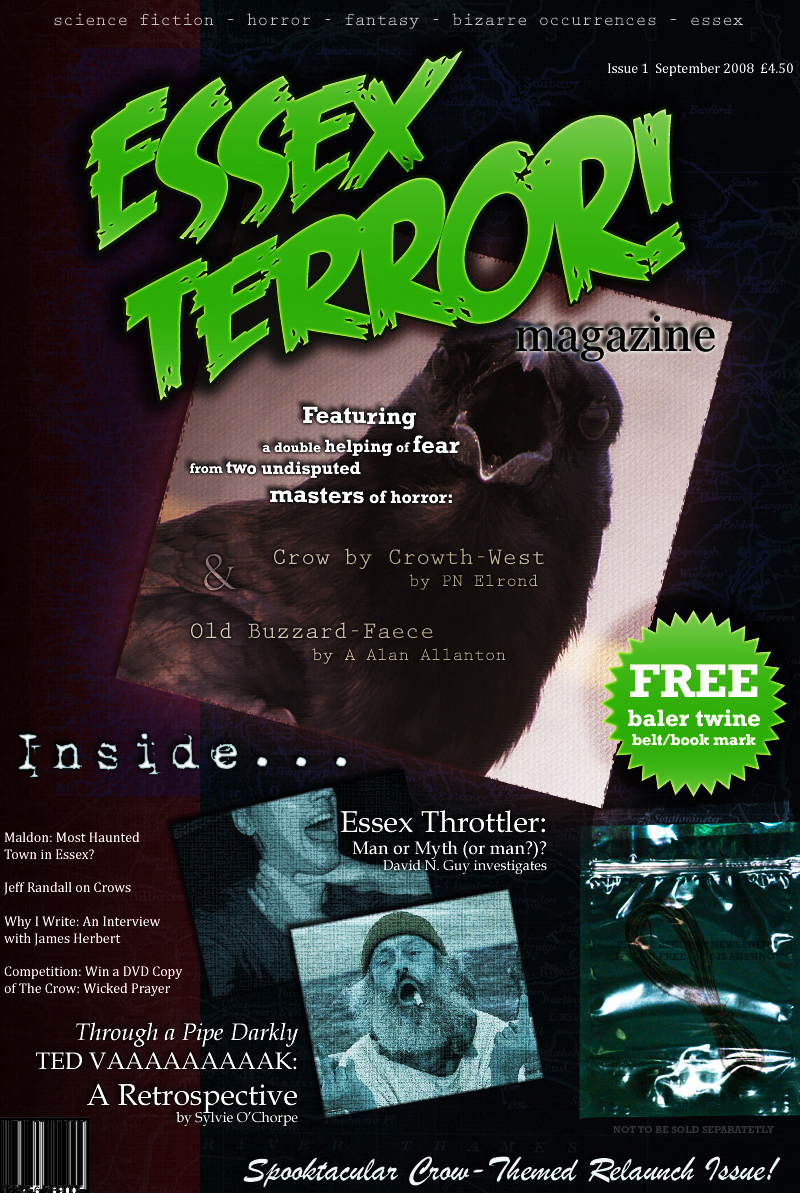
In 2007, after a 16-year break that had seen most of its original readership achieve adulthood, Essex Terror returned once more to the newsagents. The relaunched ESSEX TERROR! could not reach an agreement with the rights owners of the original Essex Terror, however, so an exclamation mark was added and a switch to capital letters was made to distinguish the titles. Because of this, and the ongoing litigation that has since arisen, the new magazine, the current website, and even Ted Vaaaak himself are considered unofficial and “non-canon” by longtime purists.

Although the ESSEX TERROR! magazine itself was not a great success, the accompanying website was considered cheap enough to continue publishing, and since then over 60 articles have been published at a rate of almost one a month.

T(op): The cover of the very first Essex Terror, design: Ted Vaak (1989)
M(iddle): The cover of the first edition of The American Essex Terror, design: Raz Webster (1991)
B(ottom): The cover of the only ever print edition of the relaunched Essex Terror!, design: Ross Field (2007)

***

The Moon Issue and its Consequences

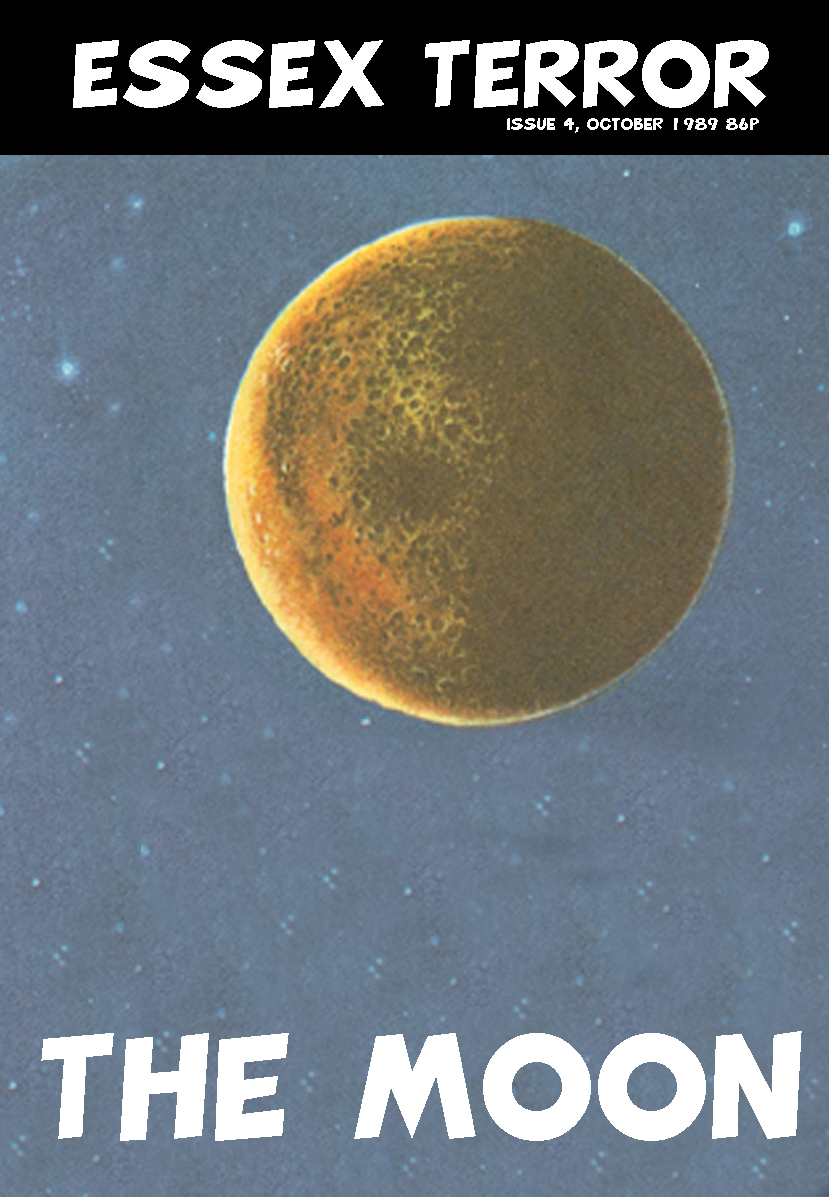
The controversial Moon Issue (Essex Terror #4, published in October 1989), was to prove disastrous for both Essex Terror and Ted Vaaaaak. The issue, heavily advertised – sources once close to Ted claim he spent over £5,000 in Witham alone – and eagerly anticipated across the county, was to prove an astonishing disappointment once it actually arrived. Readers were aghast at its meagre 16 pages, each one containing an identical illustration of the moon and a single line of text. The text, telling a particularly incomprehensible and shoddy story of interest to no-one, was seen by many to be the gravest insult, ruining as it did each perfectly good picture of the moon.

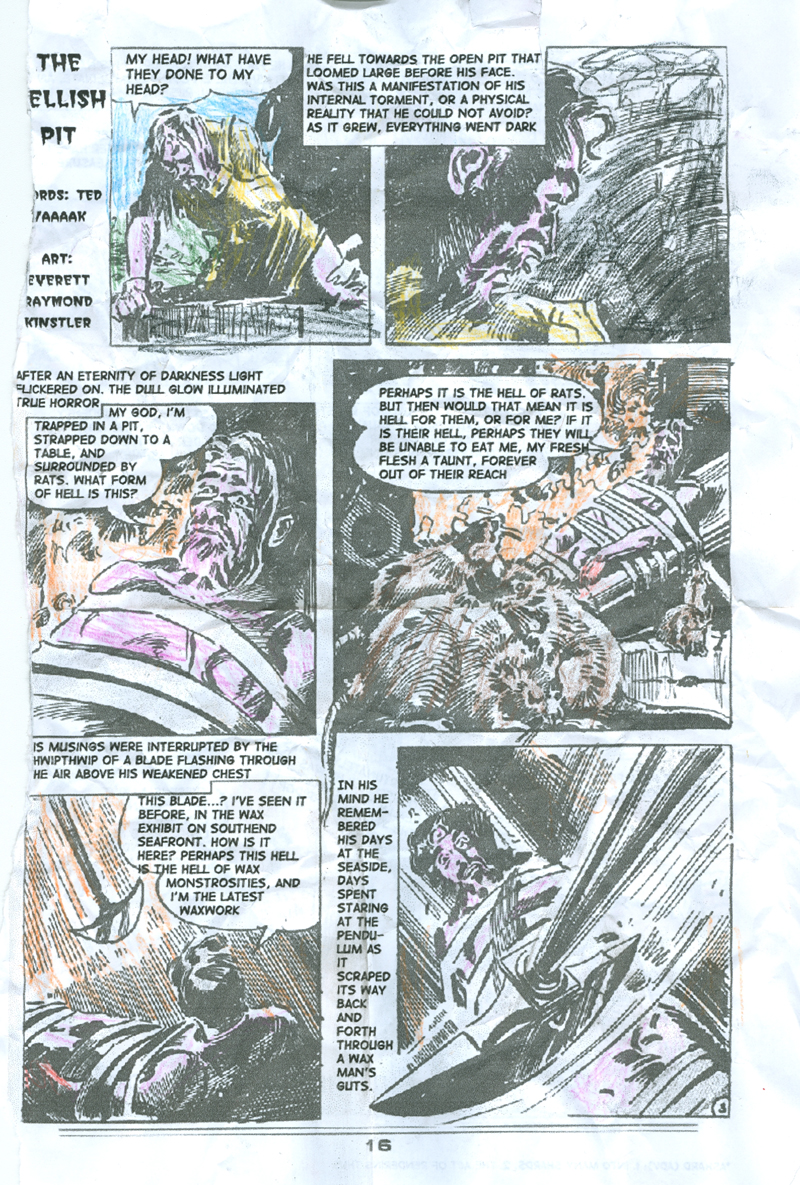
In the wake of this disaster, readership and sponsorship fell, Essex Terror’s budget was slashed by its publishers, and the magazine’s eventual demise was assured. Ted Vaaak was forced to resign, and although replacement editor David N. Guy and senior writer David N. Guy (no relation) did their best to hide the decline in budget (including colouring each issue by hand as the budget no longer stretched to cover the cost of colour printing), the magazine limped to a close just 8 issues later. Issue #12 (published in June 1990) was to be the last anyone heard of Essex Terror for almost 15 years.

T: The cover of the controversial Moon Issue, illustration: Albin Stanescu (1989)
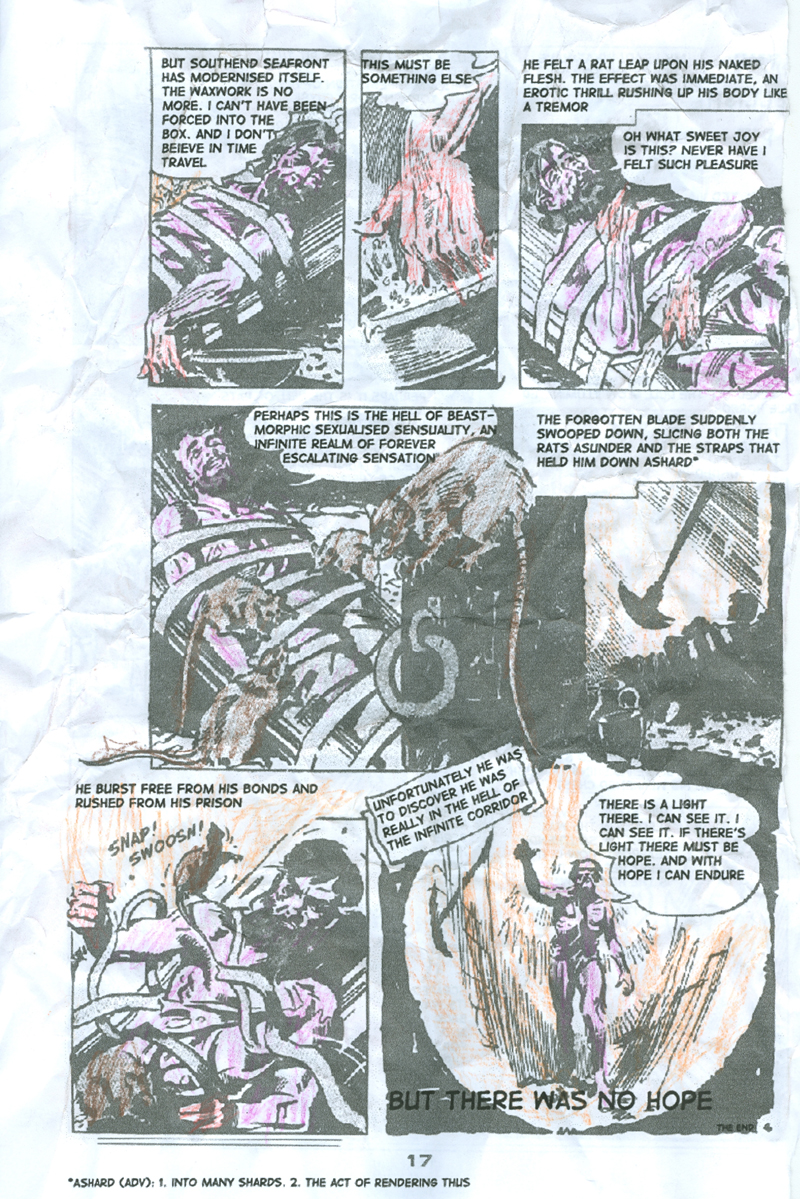
M and B: Hand coloured pages from Issue #7, text and illustration: Ted Vaaaaak (1990), colouring: David N. Guy

[The only known copy of the Moon Issue, an illegal photocopy, made by an unnamed monk minutes before the lighting of one of the many purge fires organised around the county in response to the outcry (1989), was originally displayed during the exhibtion, but was sadly lost sometime during the first seventeen minutes of admittance to the public]

***

Ted Vaaak

Ted Vaak (born Terald Cirencester Vaaak in 1928) was a writer, film-maker, editor and magazine proprietor, based primarily in Essex, England, most famous for his work on science fiction and horror title Essex Terror (1989-1990).

His early work was mostly confined to the magazine market, where he worked on an ever-changing roster of local interest and genre fiction magazines, both as a freelance writer and, often, as editor, publisher and advertiser. Between 1946 and 1969, Ted Vaaak worked on, edited, owned, or was otherwise involved in, an astonishing 287 different titles, ranging from such tepid fare as Mundon Parish News and Steeplejack!, to more exciting publications like Truly Criminal, Bloody Terror and Ghosts Of Old Leigh.

In the 1970s, Ted achieved possibly his most consistent success with a series of haunting science fiction, horror and existential sadness books for now-defunct Romford publisher Alan Books. At the time, Ted’s insistence on the plot of each of his novels being explicitly stated in title, as well as explicitly illustrated on the cover, was considered deeply unfashionable, but his publisher agreed to it on the condition that Vaaak would refrain from entering the premises. By the 80s, this system of explanatory book titles and covers was the industry standard, but unfortunately for Ted’s sales it was too late, and he turned his attention to film.

His film work, now lost, was said by some to be horrific. After a brief turn as editor of essexterror.com in 2009, Ted Vaak retired from public life in 2010 and has resisted all efforts at contact regarding this exhibition.

T: Cover illustration for The Hypnotic Moon, illustration: Tom Morton, publisher: Alan Books, 1972
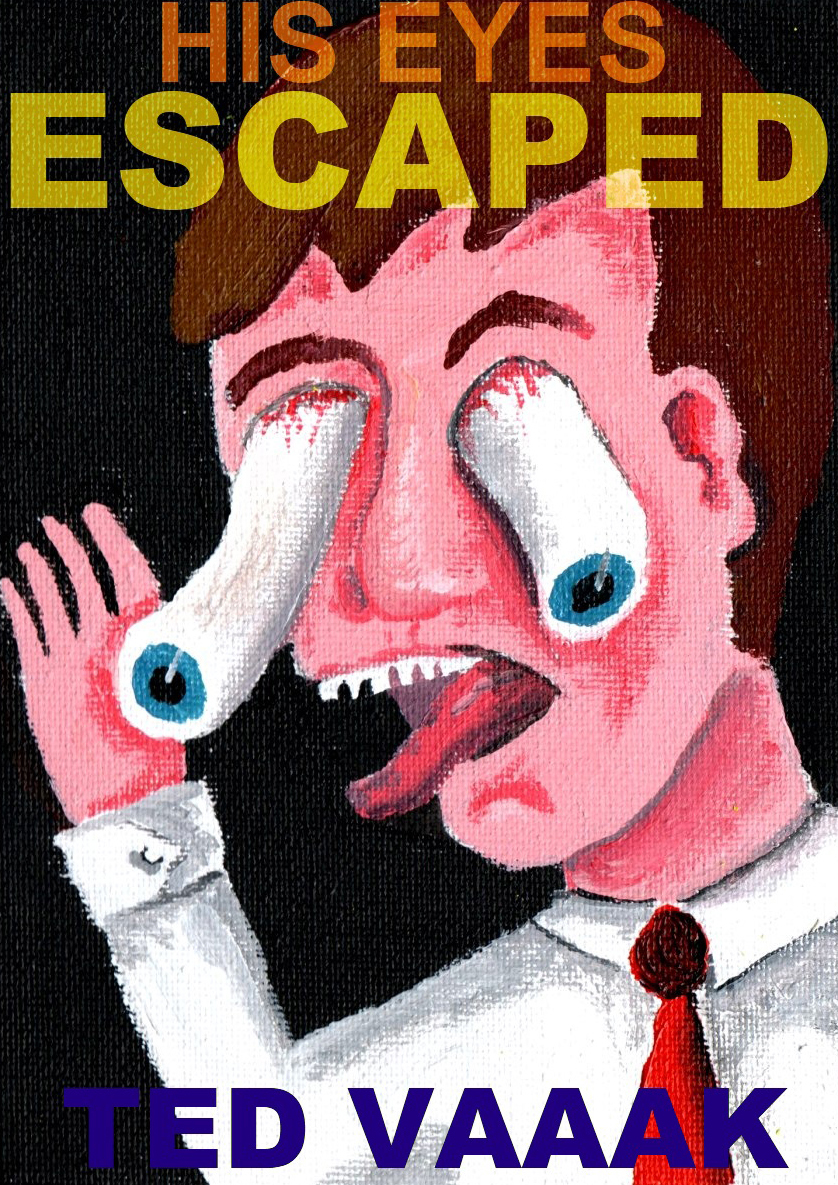
B: Cover illustration for His Eyes Escaped, illustration: Thomas Morton, publisher: Alan Books, 1974

***

The Essex Bestiary

After the collapse of Essex Terror, Ted Vaaaak retreated from the public eye and turned his attentions to his greatest passion, the history and myths of his beloved Essex. The Essex Bestiary – a work of impeccable scholarship that earned him a PhD in the Folkloric Arts from the Maldon Evening College – gathered over 700 disparate tales of Essex beasts, monsters and men, painstakingly sourced from texts and oral testimonies, and brought them together in a single easily accessible volume. Out of print since 1995, The Essex Bestiary is likely to be Vaak’s most enduring legacy.

T: The Baboons Upon The Marsh, text: Ted Vaaaaak (1995), illustration: trad
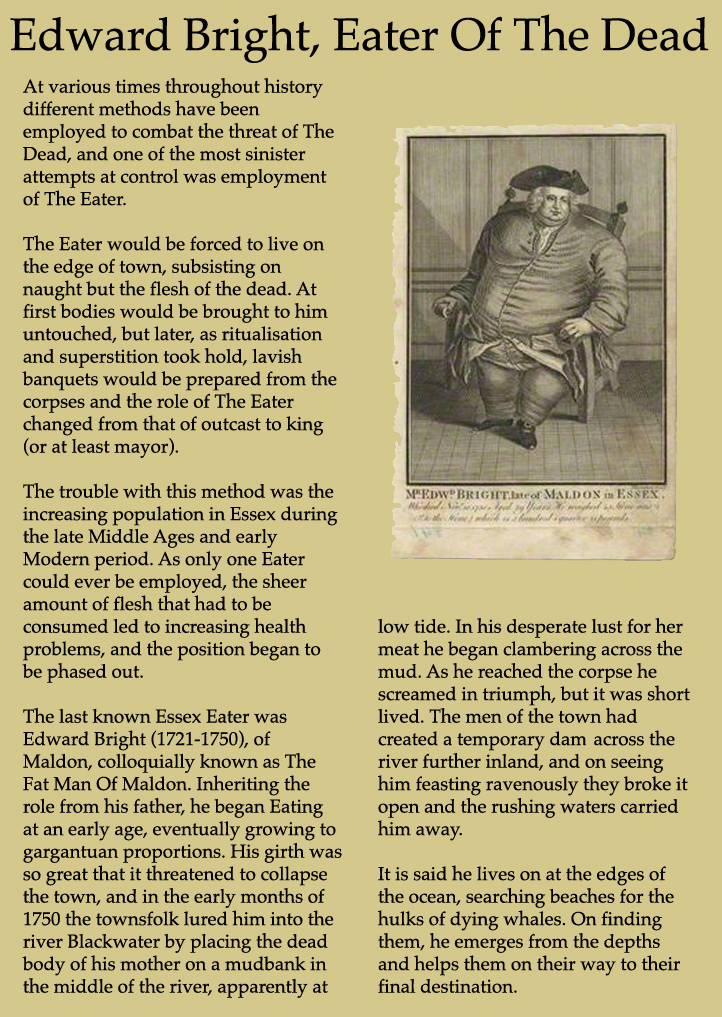
B: Edward Bright, Eater Of The Dead, text Ted Vaaak (1995), illustration: unknown

***

Ted Vaak and Jack Chick

One of the genuine curiosities in Ted Vaaak’s career is his close friendship and numerous collaborations with noted religious comic artist and author Jack Chick.

Vaaaak initially encountered Chick in 1950, when Ted’s script for a horror comic intended for the editor at Unwelcome Magazine was instead sent by accident to the then 26-year-old Chick’s apartment in Los Angeles. The illustrations Ted received several months later were so impressive that Ted solicited a number of cartoons from Jack for Vaaaaaak’s growing collection of magazines aimed at the Essex and East London market, such as Bellower, Belligerent Tales, and Weasel. (Oddly, the first cartoon, The Pub That Never Exploded, was, for reasons never adequately explained, not published for many years, only eventually appearing in Nauseous #298 in 1982.)

Jack Chick’s conversion to evangelical Christianity is said to have occurred while on a trip to Ted’s temporary home in Stow Maries in 1959, and they were never to be reconciled.

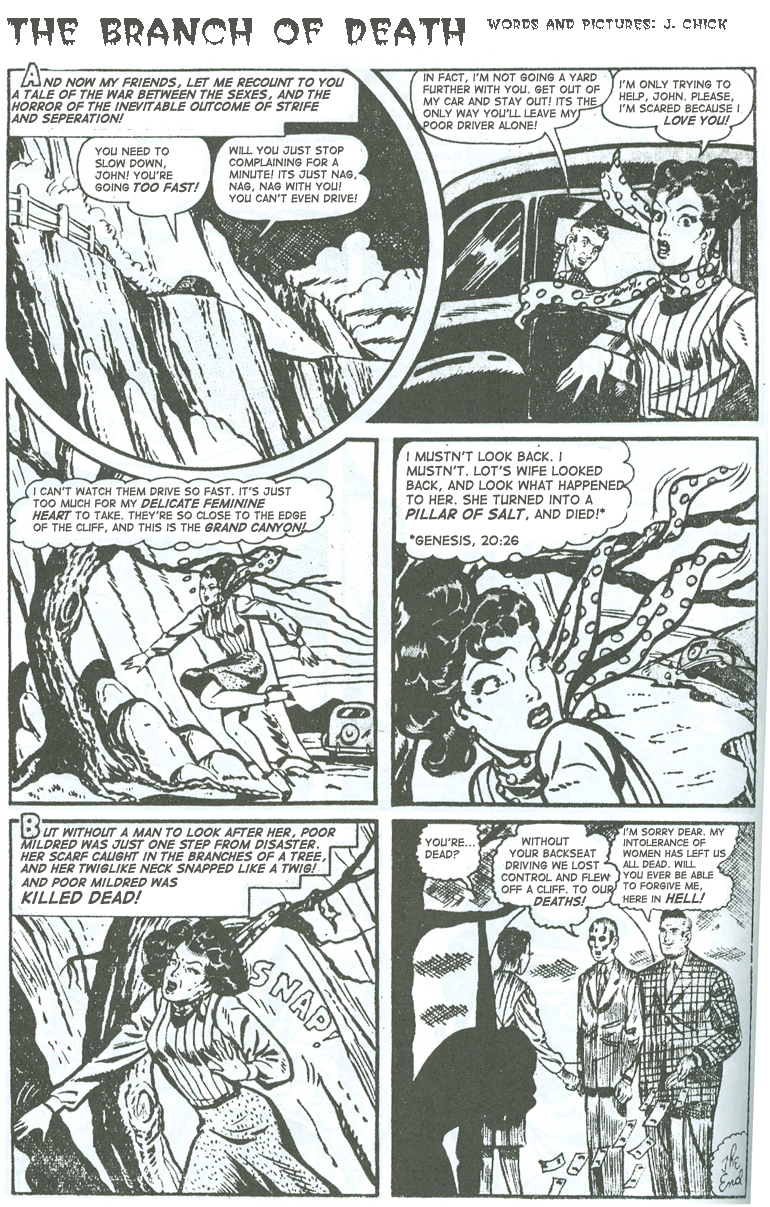
T: The Branch of Death, a rare horror comic both scripted and illustrated by Jack Chick, from Untrue Horror #2, 1954

***

ESSEX TERROR!

When the latest installment of Essex Terror was launched in 2007, every effort was made to help the new magazine, and latterly website, stand out in the crowded Essex-based horror, occult and ghost-hunting market. After a lengthy debate on the best strategies for growth, visibility and market penetration between new editor Ross Field, illustrator David N. Guy (no relation to the David N. Guy who edited the original Essex Terror nor the similarly named assistant lawyer and colourist on the aforementioned publication) and freelance marketing consultant Ted Vaaak, the decision was made to hire a steadily expanding roster of celebrity columnists, reviewers and soundtrack artists (the latter to take advantage of the freedoms the internet medium allows). So far it has proven to be a great success, with a minimum of 100 unique readers for every article published to date.

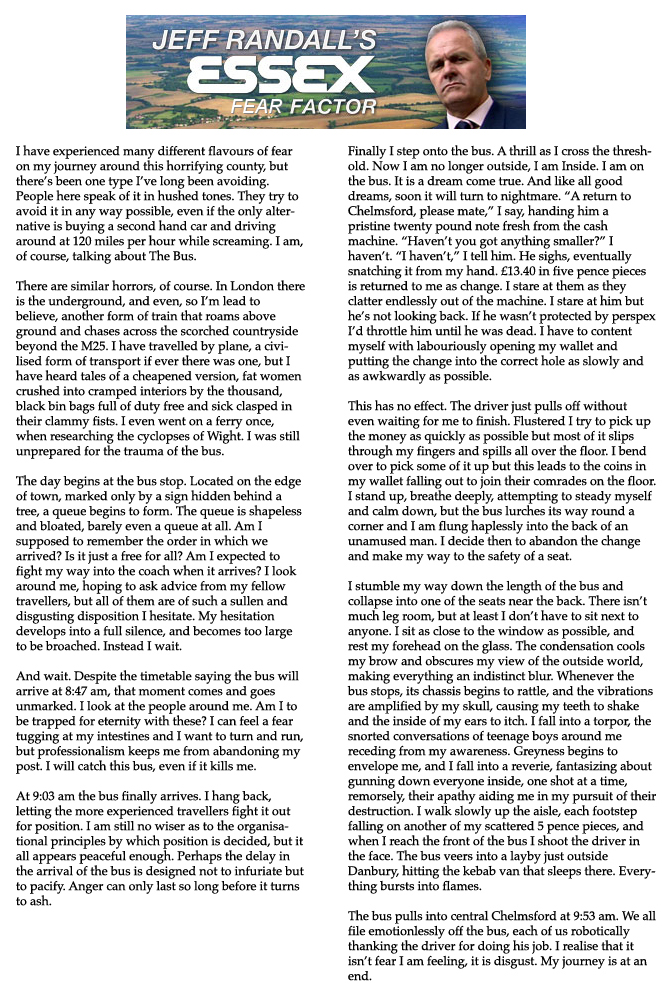
T: A popular Essex Fear Factor column by Sky News presenter Jeff Randall (2009)
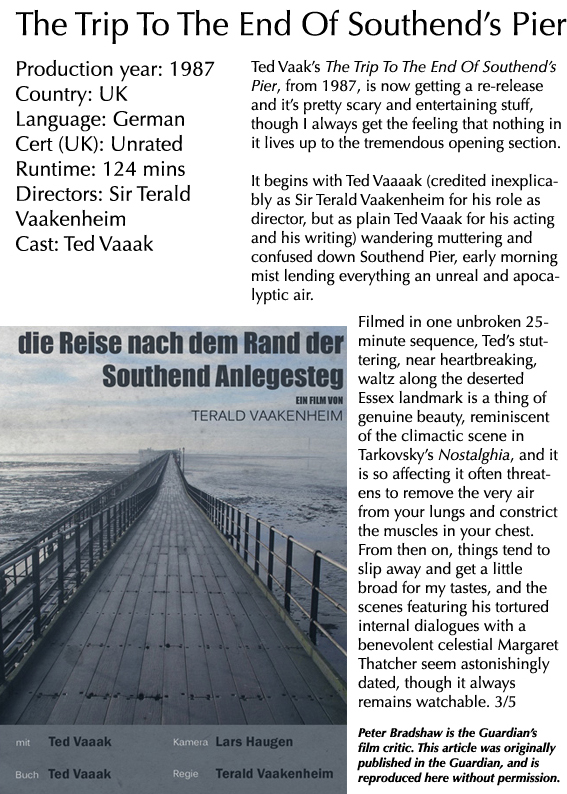
B: A review by The Guardian’s chief film critic Peter Bradshaw (2010)

***

What Next For Essex Terror?

What lies ahead for Essex Terror is difficult to predict, but one thing that can be certain is that it will continue to take advantages of all that the 21st century and its inevitable advances in technology can bring.

Not content with just utilizing the internet, Ted Vaaak is said to have ambitious plans for moving into the mobile arena. Indeed, Ted has reportedly created an Essex Terror iPhone app that makes a user’s phone “bleed” (in reality, the seepage is a mixture of condensation, rust and battery acid) while in use. It is currently awaiting approval from Apple before its hoped for release on their store at the end of the year.

Beyond that, predictions become harder. Attempts to break into the competitive ghost photography market have so far proven fruitless despite investment in a variety of cameras, and however powerful Ted’s dreams of the moon are it is unlikely to bring it any closer to his reach.

Whatever is to come, however, we can rely on it continuing Essex Terror’s proud tradition of terror, fear and perplexment in all those that it encounters.

Essex Terror Month: A Retrospective History Of Forgotten Horrors

This month is Essex Terror month.

__________

Notes:

1. You have now been warned
2. Essex Terror was a magazine devoted to horror, terror, folklore, and other memories of the occult
3. Essex is an unfictional land beyond the imaginings of man and woman alike
4. Please don’t follow any links that might sneak through to the original essex terror website
5. Because it has been occupied by immorality demons
6. And will steal your soul

Tale #47: The Old Lady And The Woodcutter

There was an old lady who lived in the woods. Her house was all on its own in the middle of a vast forest, which over the years had grown up huge and dense around it.

A woodcutter stumbled upon her house one day as he was making his way through the thick undergrowth looking for a place to make his fortune. He cut a path to her door and knocked and when she answered he said, “I’m a woodcutter and I cut wood. Let me work for you for the next three days. I shall take what I cut to the market, and then great riches we can share.”

The old lady agreed and said, “What shall you cut down today?” The woodcutter replied, “I will clear away the new growth that has tangled itself around your crops and strangled the pretty flowers of your garden to death, and made it so that you cannot even leave your home.”

And he spent the day cutting through the brambles and the thistles and the thornbushes that surrounded her house like an impassable castle wall.

That night he picked up the bundles of twigs and branches and thorns and flowers that he had cut down and carried them back to the town, where he sold them to a merchant for a fair and equitable price.

The woodcutter kept half for himself and the next morning he showed the old lady the rest of the money and said, “This is what the merchant gave me for my work and your wood.” And he gave her half of what he held, and she put it in her purse.

“And what shall you cut down today?” she said. The woodcutter replied, “I shall cut down the old growth that has grown up so high and spread out so wide it has blocked out the sky above and kept your house in perpetual darkness.”

And he spent the day cutting down the old oaks and pines that grew up like guard towers around her house.

That night he loaded up the cart he had brought with him that day, and brought the huge piles of wood back to the town, and he sold it all to a shipbuilder for a vastly inflated price.

The woodcutter kept two-thirds for himself and the next morning he showed the old lady the rest of the money and said, “This is what the shipbuilder gave me for my work and your wood.” And he gave her a quarter of what he held, and she put it in her purse.

“And what shall you cut down today?” she said. The woodcutter replied, “I shall cut down the deadwood that lingers in this house like an old and rotten stump, and with it breathe new life into this cold, dead house.”

And he took his axe and chopped the old lady into kindling. He took the kindling inside and put it on the fire and set it alight and let the flames from her body heat his new house.

__________

Notes:

1. Written August 4th, 2016

Tale #46: (fragment)

There was a woman who lived in the woods. She never cut her hair and it grew long and thick and fast and strong. Over the years it tangled up in the branches of the trees and the strangles of the bushes, and eventually it stretched out in strands across the whole of the forest.

And the woman sat in her chair by the fire and rocked herself back and forth and waited, patiently, for those she might draw near.

_________

Notes:

1. Written August 2014